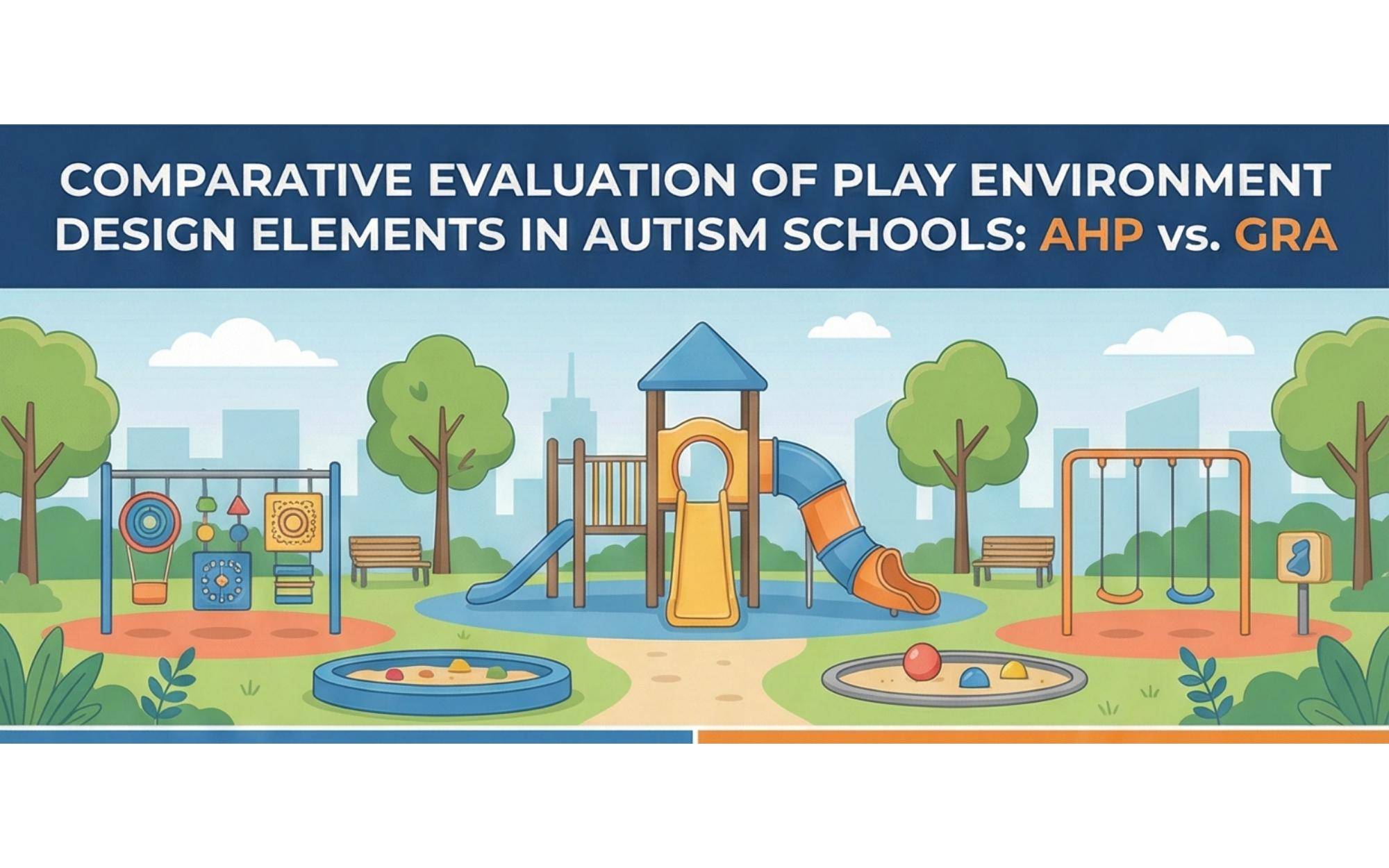
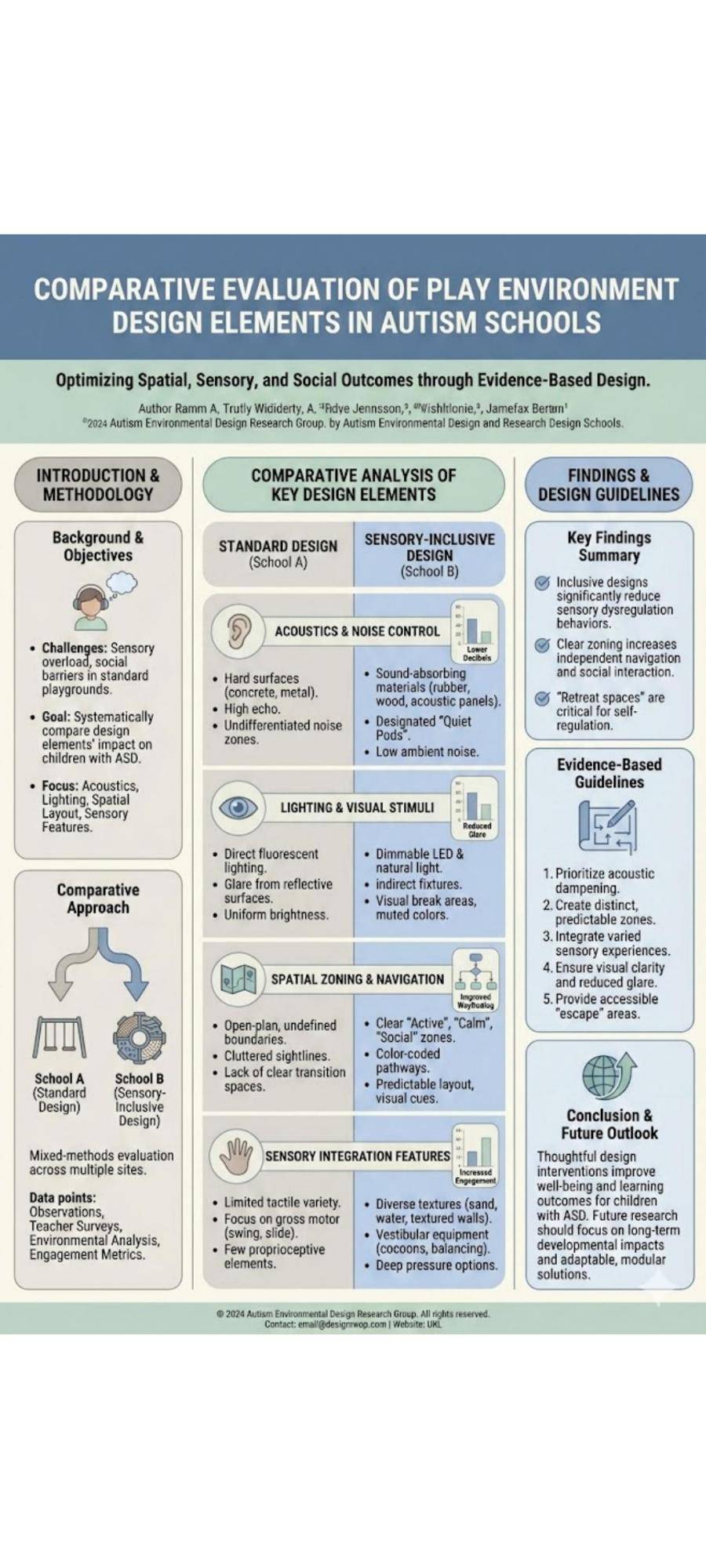
Autistic children have unique cognitive, sensory, and social needs, and play environments are key to
their development, yet existing research lacks systematic quantitative evaluation frameworks. This
study fills this gap by evaluating key design elements of play environments in autism schools within
the Yangtze River Delta Region through an integrated Analytic Hierarchy Process (AHP) and Grey
Relational Analysis (GRA) framework—an innovative methodological attempt in this field. Focusing on
developmental outcomes for autistic children, the research systematically prioritizes ten critical design
elements across four autism-specific institutions using structured expert evaluations. AHP assigned
objective weights to each element, while GRA enabled a comparative assessment of environmental
performance based on expert and teacher inputs. Results highlight safety and sensory-friendly design
as the most critical factors, whereas personalization and spatial size showed lower significance. The
findings advance evidence-based strategies for optimizing autism school play spaces, propose a
balanced design framework harmonizing safety, sensory regulation, and social interaction, and provide
support for formulating autism-friendly educational environment policies.


কোনো প্রশ্ন আছে? হোয়াটসঅ্যাপে আমাদের সাথে চ্যাট করুন, আমরা শীঘ্রই সাড়া দেব।